
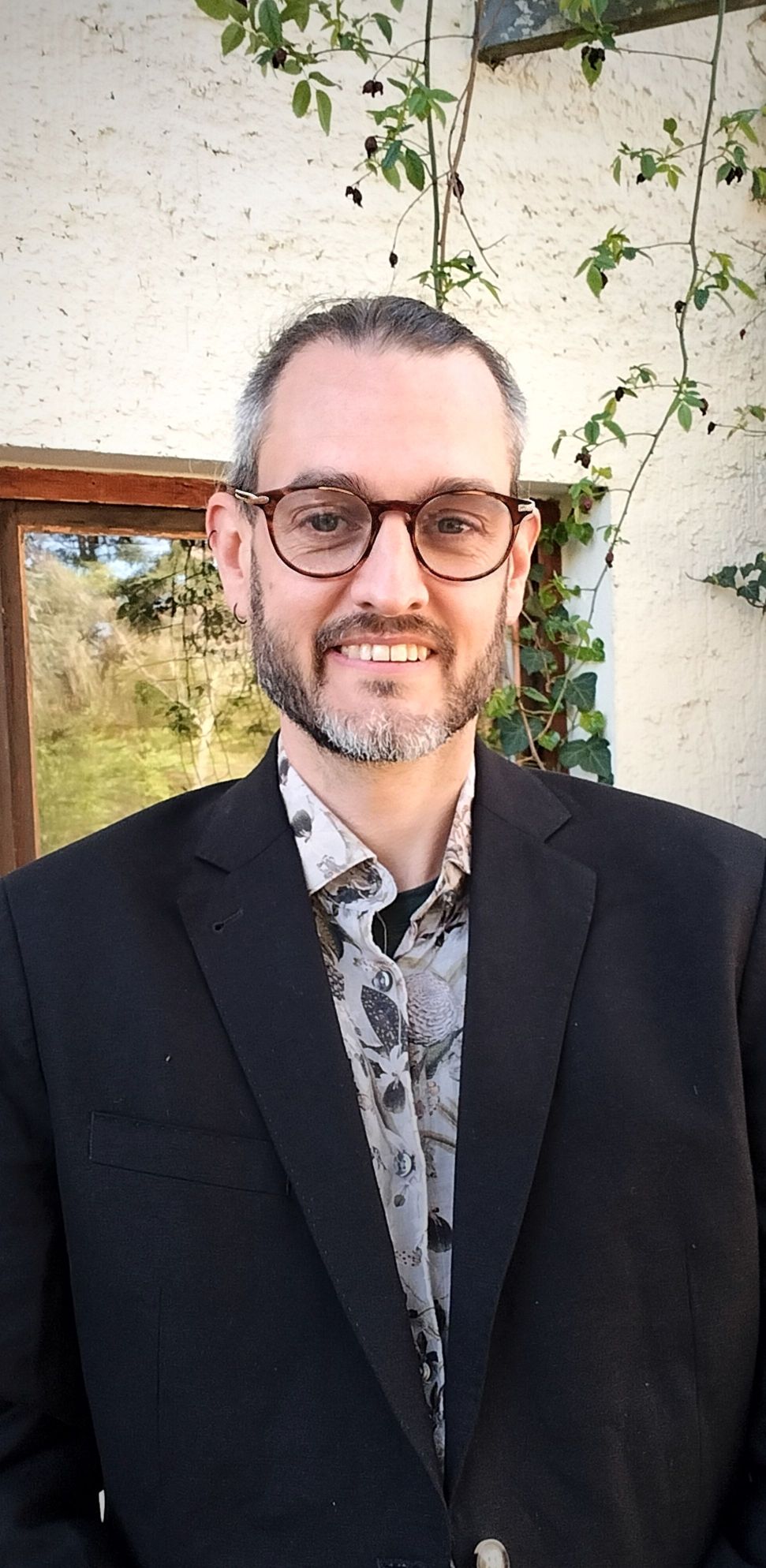
Eivind Liland
Parallel Accelerator Specialist
Silicon & Software Architecture
I work on either side of parallel compute. Whether that is designing and verifying out-of-order SIMT cores and coherent memory subsystems, or translating theoretical parallel algorithms into viable microarchitecture. I bridge the gap between physical silicon constraints and high-performance software.
Early engineer at Falanx — the original Mali GPU (acquired by ARM, 2006). Co-founder of Swarm64 — FPGA database accelerator (acquired by ServiceNow, 2021).
What I Do
Parallel Architectures
Compute architecture for GPUs, accelerators, and AI processors. Memory bandwidth walls, dataflow scheduling, keeping arithmetic units fed - I've been solving these across single-core to massively parallel systems since before they carried an AI label.
Hardware-Aware Software
I write software that exploits the underlying architecture, from graphics and compute shaders in Vulkan to parallel algorithms designed for specific systems. I specialize in wringing cycles out of constrained hardware.
RTL Design
Digital design in SystemVerilog. I write RTL with verification in mind from the start, with testbenches alongside each module, so what I hand over is already substantially validated.
Modeling & Verification
I build models for design exploration, pre-silicon software development, and as golden references for RTL verification. I write constrained-random testbenches and coverage points, and hunt down the bugs hiding in deep pipelines and coherent caches.
Things I've Built
Architecture
- Massively multicore FPGA processing platform2012–2016
- 2D interconnect for manycore processor2012–2016
- Hierarchical tiler for mobile GPU2007–2009
- Five patents in graphics and parallel accelerators2006–2018
- FPGA-based GPU for Gameboy Advance (not completed)~2006
Software
- Pump geometry tools for rocket engines and zero-emission aircraft2019–2022
- Vulkan drivers for ARM Mali2017–2018
- Texas — real-time 3D in under 4,096 bytes. 1st place NVScene, Scene.org Award2008
- Five Finger Discount — 3D engine for Gameboy Advance. Scene.org Award nominations2005–2006
RTL Design
- Barrel-threaded OoO SIMT processor2012–2016
- Fixed- and floating-point arithmetic units2012–2016
- 2D interconnect and coherent caches2012–2016
- Hierarchical triangle rasterizer~2005
Verification
- Swarm64 SIMT cores, ALUs, caches and interconnect2012–2016
- Swarm64 CI pipeline for hardware regression and validation2012–2016
- Mali GPU shader engine, texture mapper, tile buffer and caches2003–2009
- Mali GPU tech demos for marketing and validation2003–2006
Where I've Been
ARM Mali GPU
In 2003, I took a job beside my studies at Norwegian start-up Falanx Microsystems, developing pre-silicon 3D tech demos for early prototypes of the Mali GPU running on FPGA. Over the coming years, I contributed across software, RTL design, verification and hardware architecture. ARM acquired us in 2006, and Mali powers billions of devices today.
Swarm64
Co-founded Swarm64. We built FPGA-based hardware that accelerated database computation — massively parallel, deployed in the cloud. Partnered with Intel and Xilinx. Acquired by ServiceNow in 2021.
Orbital Machines
Founded Orbital Machines, a sociocratic newspace startup that scaled to 15 employees. Worked on propellant pump designs for several customers in the launcher, lander, and zero-emission aviation space. Contributed to the Python tooling for parametric pump geometry design and optimization.
Flux & Flow AS (present)
Independent consulting through my own firm since 2023 — continuing in aerospace with propellant systems and pump design before returning to parallel architecture, RTL, verification and programming for GPUs.
Loads from YouTube — Google will receive your IP. Privacy notice
How I Work
I partner with teams on a contract basis, billed hourly. I typically structure my work around 2-to-6-month dedicated phases. This provides the runway to deeply integrate with your architecture, solve fundamental structural bottlenecks, and execute a clean handover.
I'm available for remote work globally, or on-site in the Berlin area. Happy to start with a short call to see if it's a fit.
Ready to talk?
If you're designing hardware — or developing software for a system with massively out-of-order parallel compute and coherent multi-level memory hierarchies — let's talk.